April 1, 2026
Wednesday for Holy Week
Readings for Today
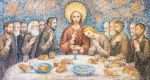
 Bernard van Orley, CC0, through Wikimedia Commons
Video Listen for English
“Amen, I dey tell una, one of una go betray Me.” This one pain dem well-well, and dem begin ask Him one after another, “No be me, Lord, abi?” He answer say, “Na di person wey don dip im hand inside di same plate with Me go betray Me.” Matthew 26:21–23
Di Last Supper na both glorious moment of grace and painful moment of betrayal. During dat meal, Jesus establish di Eucharist, di gift of His Body and Blood, Soul and Divinity, wey dey keep His saving sacrifice present until di end of time. Na still for dat holy meal one of Jesus’ closest companions lie to His face and make up im mind to betray Him for thirty pieces of silver.
According to di Torah, if ox kill slave, di owner of di ox must pay di slave master thirty pieces of silver. Di holy irony be say Judas betray Jesus for di price of slave, even though Jesus come to set everybody free from di slavery of sin.
When Jesus tell di Twelve say one of dem go betray Him, He no talk with anger or pity for Himself. His words show holy sorrow, together with acceptance, clear understanding, and gentleness. This sorrow no be only sadness because of di suffering wey He go soon face; na sorrow full of love for di lost soul of di person wey go betray Him. As di matter pain di disciples well-well, dem answer one after another, “No be me, Lord, abi?”
Di Greek word Kyrios, wey dem use here for “Lord,” mean authority, mastery, and lordship wey belong to God. E appear plenty times for di New Testament, mainly when dem dey refer to Jesus. For di Greek Old Testament (di Septuagint), Kyrios take di place of YHWH, di holy name of God wey dem no dey pronounce, about 7,000 times. As di eleven call Jesus Kyrios, dem recognise Him no be only as their teacher, but as di Messiah and Son of God. This title show relationship of trust and reverence, as dem acknowledge Jesus’ divine authority.
When Judas talk, he use Rabbí instead of Kyrios—“No be me, Rabbi, abi?”—na di Hebrew and Aramaic word wey mean “teacher,” written with letters from another language. Even though this way of addressing Jesus show respect, e no reach to acknowledge Him as Kyrios. E focus on Him as human teacher instead of as Lord, Messiah, and God. This difference no too obvious, but e important. E invite us to reflect on how we dey approach Jesus during Holy Mass, since this conversation happen for di Last Supper—di first Mass. We dey approach Him with di heart of Judas, wey recognise Him only for earthly way, or with di faith of di other disciples, wey see Him as Lord?
Judas no hate Jesus. Unlike di Pharisees wey want make He die, Judas regret say he betray Him, try to return di thirty pieces of silver, and, sadly, “go hang himself” (Matthew 27:3–5). Di biggest way wey he fail na say he no fit look beyond Jesus’ humanity to recognise His divinity. Na himself he fix im eyes on—especially im greed and selfish desires. For similar way, when we approach di Eucharist without faith, surrender, and adoration, we dey risk to fall inside Judas’ error: to focus more on ourselves than on Christ.
For Mass, we dey say, “Lord, have mercy,” no be “Rabbi, have mercy.” This prayer must come from deep inside our hearts, as we recognise say we need mercy and na God be di source of am. When we kneel down during di consecration, our hearts suppose cry out, “My Lord and my God!” But how often our minds dey wander, as we dey think about wetin we plan to do after Mass? When we fail to approach Jesus with faith and reverence, we miss di chance to encounter Him as He truly be—our Lord and our God.
Reflect today on how you dey take part for Holy Mass. See yourself for di Last Supper, and join dat moment with every Mass wey you attend. Pray make you receive Jesus with love, devotion, and reverence, as you look beyond di appearance of bread and wine to encounter your Lord.
My Lord and my God, I believe in You, I adore You, I put my hope for Your mercy, and I love You with all my heart. Abeg, fill me with deep faith in Your presence, especially every time wey I attend Mass. Make I recognise say I need You and surrender myself completely to Your mercy and love. Jesus, na You I trust.
De Tati-Seven Tok dem for Tink Deep:
40 De for Desert & 40 De for di Kros
More Reflections on the Gospel
Reflection Dem about God im Mercy
Scripture Meditation Dem for Lent
Di Readings wey You Fit Choose for Mass