Sunday, March 31, 2019
The Fourth Sunday of Lent, Year C
Click here for reflection for readings from Year A

Coming to his senses he thought, “How many of my father’s hired workers have more than enough food to eat, but here am I, dying from hunger. I shall get up and go to my father and I shall say to him, ‘Father, I have sinned against heaven and against you. I no longer deserve to be called your son; treat me as you would treat one of your hired workers.’” Lk. 15:17-19
Bakit tayo kumakapit sa ating mga kasalanan? Ang siping ito ay mula sa kuwento ng Alibughang Anak. Dapat ay alam na alam natin ang kuwentong iyon. Nagpasya ang anak na iwan ang kanyang ama at kunin ang mamanahin niya balang araw, at nilustay niya ito sa isang makasalanang pamumuhay. Nang maubos ang kanyang pera, nasadlak siya sa matinding pangangailangan. Kaya ano ang ginawa niya? Natauhan siya!
Ang pangungusap na ito pa lamang ay nararapat nang pagnilayan. Una, ipinahahayag nito kung ano ang nangyayari sa isang taong nahuhulog sa makasalanang pamumuhay. Sa kasong ito, kalaunan ay inani ng anak ang bunga ng kanyang kasalanan. Natuklasan niyang iniwan siya nitong dukha at nag-iisa. Hindi niya alam kung kanino lalapit. At bagaman maaaring hindi kasinlubha ng sa anak na ito ang ating mga kasalanan, mararanasan nating lahat ang kahungkagang dulot ng mga kasalanang ginagawa natin, tulad ng naranasan ng anak na ito.
Ang malalim na aral na makukuha natin mula sa anak na ito ay talagang nagbago ang kanyang pag-iisip. Sa partikular, sa kanyang “pagbabalik sa katinuan,” nakilala niya ang dalawang mahalagang bagay. Una, napagtanto niyang higit ang kanyang halaga kaysa sa isang buhay na salat sa lahat. Walang sinuman ang dapat mamuhay sa karalitaan at kahungkagan. Kaya, nang makita niya ang kanyang sariling dignidad, napagtanto niyang nilikha siya para sa higit pa rito.
Secondly, he knew he could turn to his father. What a blessing it was for him to know this. The reason he knew he could turn to his father was that his father clearly loved him with an unconditional love. The mercy in the heart of the father was so strong that the son was aware of it and this awareness gave him confidence to turn to him.
Pagnilayan ngayon ang dalawang hakbang na ito. Nakikita ng anak ang kanyang kahapisan at nakikita rin niya ang kanyang ama bilang taong malalapitan niya nang buong tiwala. Dapat nating pagsikapang gawin din ito sa ating sariling buhay. Hindi tayo kailanman itatakwil ng Ama sa Langit. Anuman ang ating nagawa o gaano man tayo kalayo sa Kanya, ang pag-ibig ng Ama ay ganap, hindi sumusuko, walang kundisyon, at laging nag-aanyaya. Handa at bukal sa Kanyang loob na patawarin ang bawat pagkakamali natin kung lalapit lamang tayo sa Kanya nang may tiwala. Matauhan ka tungkol sa iyong mga kasalanan! Talikuran ang mga ito, magsisi, at magtiwala sa awa ng Diyos.
Lord, my sins do leave me dry and empty inside. I see the misery and pain that result from the sinful choices I have made. Help me, dear Lord, to come to my senses and to turn from every sin I commit. Help me to see that Your mercy is far greater than anything I have done. I thank You for Your perfect love and turn to You in my need. Jesus, I trust in You.
40 Days at the Foot of the Cross – Reflection Twenty-Five – Jesus Falls
Higit pang mga Pagninilay sa Ebanghelyo
Mga Pagninilay sa Inaawit na Awa ng Diyos
Grace from the Ordinary
The Fourth Sunday of Lent, Year A
(Note: This Gospel is optional for Years B & C with Scrutinies)

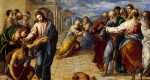
As Jesus passed by he saw a man blind from birth…He spat on the ground and made clay with the saliva, and smeared the clay on his eyes, and said to him, “Go wash in the Pool of Siloam” — which means Sent —. So he went and washed, and came back able to see. John 9:1, 6-7
Who was this man? Interestingly, he does not have a name. He is only referred to as the “man blind from birth.” This is significant in the Gospel of John because the lack of a name is also seen, for example, in the story of “the woman at the well.” The fact that there is no name indicates that we should see ourselves in this story.
“Blindness” is our inability to see the hand of God at work all around us. We struggle to see the daily miracles of God’s grace alive in our lives and alive in the lives of others. So the first thing we should do with this Scripture is strive to see our lack of sight. We should strive to realize that we so often do not see God at work. This realization will inspire us to desire a spiritual healing. It will invite us to want to see God at work.
The good news is obviously that Jesus cured this man, as He willingly cures us. To restore sight is easy for Jesus. So the first prayer we should pray as a result of this story is simply, “Lord, I want to see!” The humble realization of our blindness will invite God’s grace to work. And if we do not humbly acknowledge our blindness, we will not be in a position to seek healing.
How He heals this man is also significant. He uses His own spit to make mud and smear it on this man’s eyes, which is not immediately that appealing. But it does reveal something quite significant to us. Namely, it reveals the fact that Jesus can use something exceptionally ordinary as a source of His divine grace!
If we look at this in a symbolic way we can come to some profound conclusions. Too often we look for God’s action in the extraordinary. But He so often is present to us in that which is ordinary. Perhaps we will be tempted to think that God only works His grace through heroic acts of love or sacrifice. Perhaps we are tempted to think that God is not able to use our daily ordinary activities to perform His miracles. But this is not true. It is precisely those ordinary actions of life where God is present. He is present while washing the dishes, doing chores, driving a child to school, playing a game with a family member, carrying on a casual conversation or offering a helping hand. In fact, the more ordinary the activity, the more we should strive to see God at work. And when we do “see” Him at work in the ordinary activities of life, we will be healed of our spiritual blindness.
Reflect, today, upon this act of Jesus and allow our Lord to smear His spit and dirt on your eyes. Allow Him to give you the gift of spiritual sight. And as you begin to see His presence in your life, you will be amazed at the beauty you behold.
Lord, I want to see. Help me to be healed of my blindness. Help me to see You at work in every ordinary activity of my life. Help me to see Your divine grace in the smallest events of my day. And as I see You alive and active, fill my heart with gratitude for this vision. Jesus, I trust in You.
40 Days at the Foot of the Cross – Reflection Twenty-Five – Jesus Falls
Higit pang mga Pagninilay sa Ebanghelyo
Mga Pagninilay sa Inaawit na Awa ng Diyos